Large Paring Knife | 59
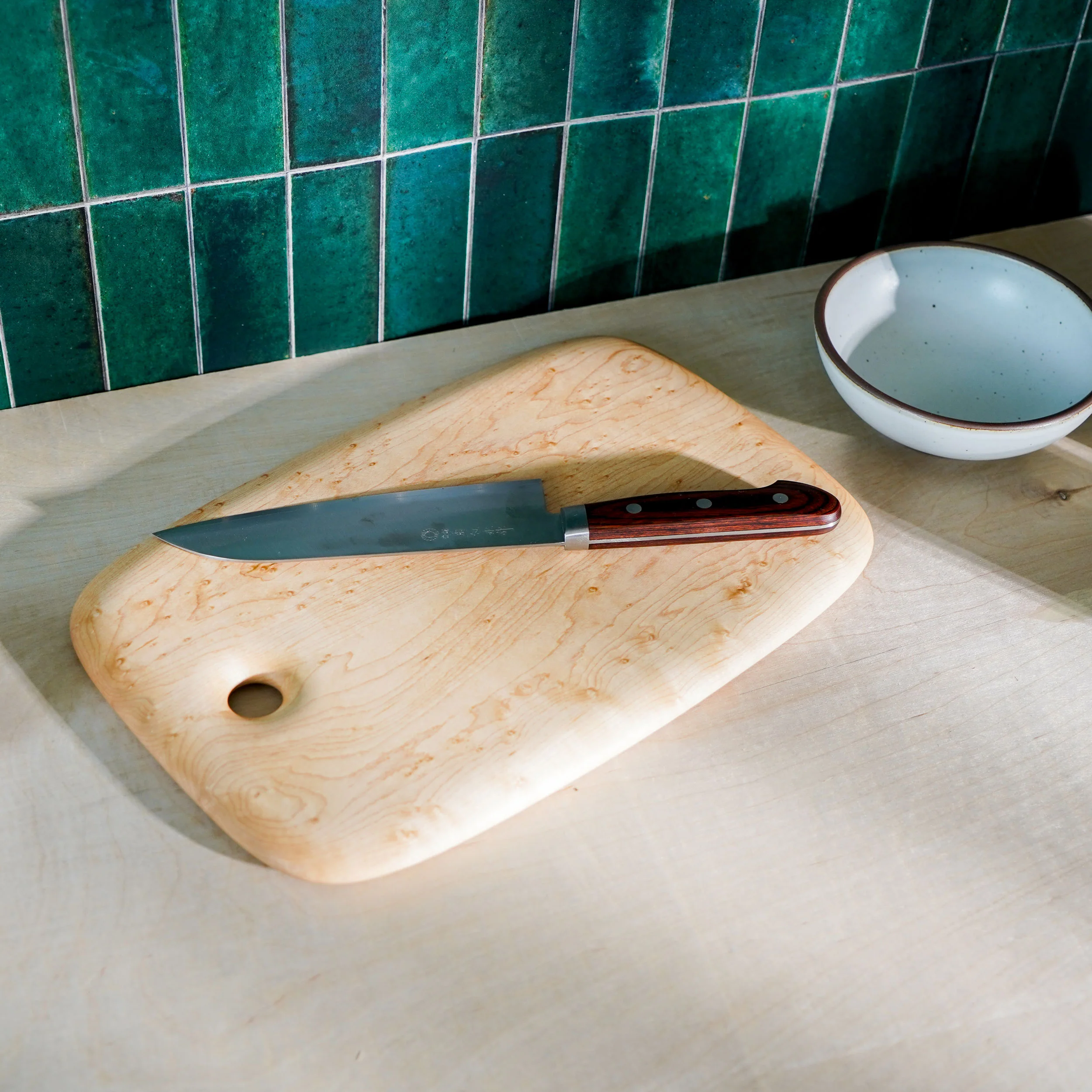
This flat blade paring knife is just the right size for zesting citrus, peeling a pear, de-veining shrimp or other tight tasks a recipe requests of you - but lager than it's brother and can also be used to chop ginger, garlic or other small produce.
Master Shin makes roughly 300+ different designs of knives and farm tools. He uses railroad track, repurposing the carbon steel which is rich is manganese and can be heated to a very high temperature. This steel is hardened, wear-resistant and good for cutting. The handles are made of chestnut, slowly dried in sunlight for years so it is lightweight, strong and rot-resistant.
With knife production, the steel is hammered a thousand times to reach the thin and sharp edge, which keeps sharp longer than inferior knives. Master Shin’s knives do not have the angular beveled edge seen in Japanese and Western knives; this is Master’s Shin’s preference which takes additional hammering to achieve, and is an another unique feature of his.
Master Shin’s uses an X banding technique “dang ghi” around the wood handle without burning the wood, one of his many trademarks. In Korea the X mark was reserved traditionally for high quality knives, so as to distinguish them from lesser quality iron rich steel. Master Shin’s blades are stamped with his mark, the #60 referring to his heritage status.
Original: $170.00
-65%$170.00
$59.50


Description
This flat blade paring knife is just the right size for zesting citrus, peeling a pear, de-veining shrimp or other tight tasks a recipe requests of you - but lager than it's brother and can also be used to chop ginger, garlic or other small produce.
Master Shin makes roughly 300+ different designs of knives and farm tools. He uses railroad track, repurposing the carbon steel which is rich is manganese and can be heated to a very high temperature. This steel is hardened, wear-resistant and good for cutting. The handles are made of chestnut, slowly dried in sunlight for years so it is lightweight, strong and rot-resistant.
With knife production, the steel is hammered a thousand times to reach the thin and sharp edge, which keeps sharp longer than inferior knives. Master Shin’s knives do not have the angular beveled edge seen in Japanese and Western knives; this is Master’s Shin’s preference which takes additional hammering to achieve, and is an another unique feature of his.
Master Shin’s uses an X banding technique “dang ghi” around the wood handle without burning the wood, one of his many trademarks. In Korea the X mark was reserved traditionally for high quality knives, so as to distinguish them from lesser quality iron rich steel. Master Shin’s blades are stamped with his mark, the #60 referring to his heritage status.